
Bushcraft With Back Problems: Adapting Instead of Giving Up
When your back isn’t perfect, the outdoors can feel like it’s slipping away from you.
I’ve got spinal issues. A hip that needs replacing. Nerve problems. And there were moments I genuinely wondered whether bushcraft was becoming something I “used to do.”
But here’s what I’ve learned: you don’t quit — you adapt.
This isn’t theory. It’s what I’ve had to figure out in real UK woodland conditions.
Camping and the outdoors have been part of my life for as long as I can remember. Sleeping in the woods. Campfires. Swimming and fishing in the lake. My dad serving me burnt hot dogs for dinner that even the raccoons wouldn’t eat.
As I got older, I went down a different path for a while. I trained in MMA and fought semi-pro. I was fit, strong, and pushed my body hard. At that age, you feel invincible.
What no one really tells you is that sometimes you pay for it later.
Fast forward a few years and now I’m dealing with a prolapsed disc in my lower back, a hip that needs replacing, and a cavernoma on my spinal cord. Things change. Your body changes. And you have two choices:
Give it up.
Or adapt.
For me, bushcraft and being outdoors became less about pushing limits and more about slowing down. The thought of heading into the woods, putting up a hammock and making a coffee is now therapy.
But doing bushcraft with back problems requires adjustments.
Reduce Pack Weight First
If you have back pain, your pack weight is the first thing to address.
General health matters — losing excess bodyweight helps — but gear weight is immediate and controllable.
Do you really need a cast iron pan for a simple woodland meal?
Could aluminium or titanium do the same job without punishing your spine?
I recently moved toward lighter gear and picked up a compact titanium cook kit. It includes a windshield, 700ml pot with lid, stove and fuel — all nesting inside the pot.
The benefit isn’t just reduced weight.
It’s reduced movement.
Everything is organised. No digging around. No repeated bending. Less strain on the back.
Don’t Pack Your Fears
This was a big mindset shift for me.
All those “what if” scenarios can easily add 5–10lbs to your bag.
What if I need this?
What if something goes wrong?
What if I forget that?
Not every woodland trip is survival.
Carry the essentials for your goal — not every possible emergency your imagination creates.
Your back will thank you.
Bushcraft Is 80% Bending
Here’s something not often discussed:
Bushcraft involves constant bending.
Picking up sticks.
Reaching into your pack.
Starting a fire.
Hammering pegs.
Dropping things (which I seem to do a lot).
If you’ve got a bad back, that repetitive movement builds up quickly.
That’s where adapting your setup becomes critical.
Work Higher, Not Lower
One of the biggest changes I made was working at waist height whenever possible.
I now set up near downed trees or natural flat surfaces and use them as makeshift worktops.
The days of sitting cross-legged on the ground for hours are gone.
Stoves on tables.
Cooking raised.
Organising gear at working height.
It’s still bushcraft. It’s still outdoors. You’re just protecting your body.
Hang More, Bend Less
A simple trick that makes a big difference: hang your backpack.
Using a small toggle or branch to suspend your bag saves dozens of unnecessary bends during a trip. Think about how many times you go into your pack during a day.
I also made something I call the “everything rope.” It’s paracord with toggles, prusik loops and small clips along its length. Strung between two trees, it becomes a hanging system for:
Cooking gear
Drying clothes
Tools
Accessories
It keeps everything off the ground and within easy reach.
Check out my Woods Loadout page
Know Your Limits — and Respect Them
There’s pride in pushing through discomfort.
But there’s no reward for long-term damage.
Bushcraft isn’t about proving toughness.
It’s about enjoying nature, practising skills, and finding peace in the woods.
If that means:
Lighter gear
Shorter trips
Smarter campsite selection
Higher working setups
That’s not weakness.
That’s maturity.
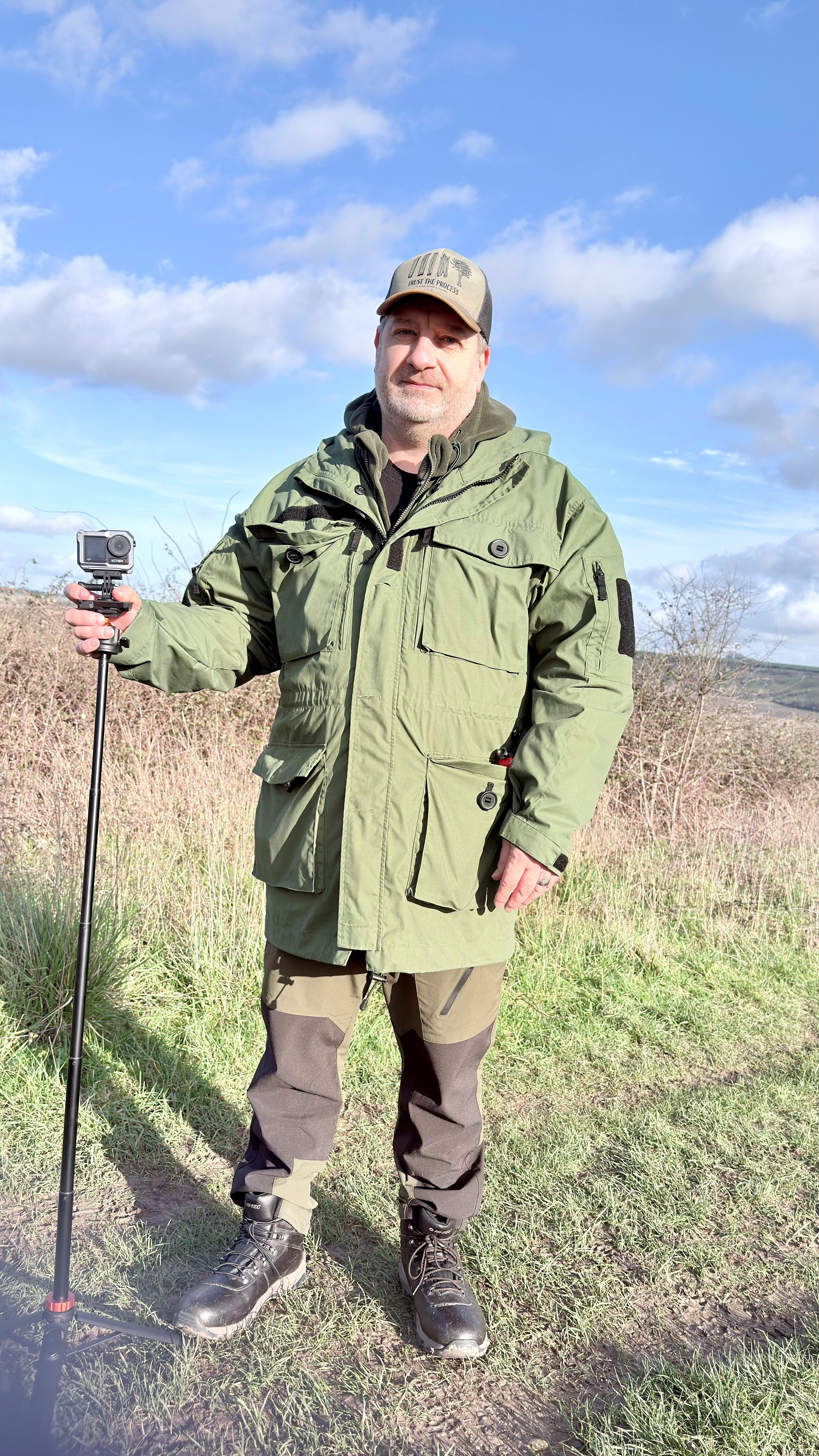
Joe – Prepper in the Woods
UK Bushcraft & Practical Outdoor Skills